
Neighbor Gap Bridge (NGB) advances ethical, adaptive learning by creating experimental spaces where emerging technologies, institutions, and practices can be examined, tested, and reconfigured before they become fixed or irreversible. NGB operates through experiments:
Cognitive Futures
Cognitive Futures is a participatory artistic research project exploring how human agency, authorship, judgment, and meaning-making are changing in relation to artificial intelligence. Through the development of cultural probes, experimental conversations, storytelling, embodied activities, and AI-mediated interactions, the ngb team will investigate how people perceive and negotiate their relationships with emerging technologies. The activity includes designing and prototyping participatory experiences; documenting responses; experimenting with voice and conversational AI; and analyzing the resulting narratives and interactions. Themes include human agency, technological change, identity, authorship, values, ambiguity, and the cultural stories through which people understand technology.
Otis College Courseware – AI PLAY Creative Action/ 300F
AI PLAY invites students to explore artificial intelligence as a cultural, ethical, and creative force—not simply as a tool. In the Neighbor Gap Bridge Lab, students investigate what happens to human agency, authorship, judgment, creativity, and participation as AI becomes increasingly embedded in everyday life and learning.
Through embodied experiments, collaborative making, conversation, reflection, and encounters with AI, students test assumptions and explore different ways of knowing. The Lab values hesitation, curiosity, refusal, play, and uncertainty alongside technological experimentation, creating space for students to decide when, why, and how AI enters their creative process. AI is welcomed but never required. Students are encouraged to experiment responsibly while maintaining meaningful choice over what they delegate to technology and what they retain as distinctly human acts of thinking, making, and relating.
Lightweight reflective instruments help make changes in students’ perceptions of agency, creativity, authorship, and participation visible over time. In this way, the Neighbor Gap Bridge Lab functions not only as a course, but as a living research environment for exploring the educational conditions that help human agency flourish during periods of technological transformation.
Between Storytelling, Theory and System: A Dialogic Experiment in AI and Ethical Inquiry (Workshop / Stockholm University · August, 2026)
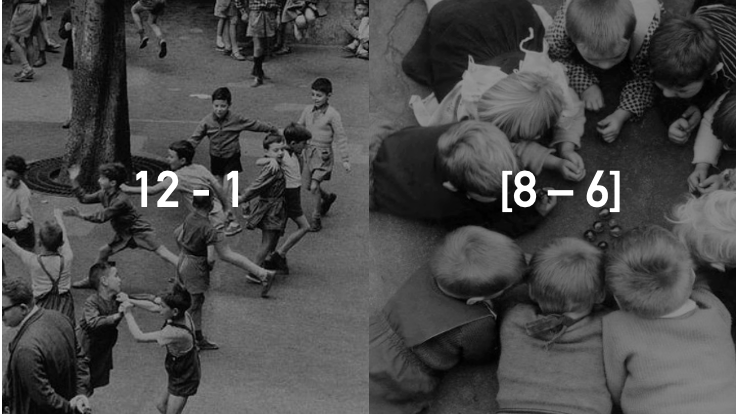
A live, participatory experiment in ethical inquiry using a custom-built “Ethical NGB GPT.” Drawing on children’s moral fables, educators and classical philosophy, the workshop creates an open, dialogic space to explore questions of authorship, responsibility, bias, and automation. Inspired by Simone de Beauvoir, ethics is approached not as a fixed principle, but as a shared, evolving practice
NGB: A Care-Centered Algorithmic Literacy in Design Education
(Manuscript under review)
As artificial intelligence becomes embedded in educational environments, this paper argues for a shift from tool-based approaches to care-centered forms of algorithmic literacy. Drawing on ethics of care and participatory design, it examines how learning environments can be structured to support attention, relationality, and shared responsibility in conditions shaped by AI systems. Rather than prioritizing efficiency or optimization, the paper positions care as a critical orientation for engaging emerging technologies in education.

A Cognitive Home, Displaced: Minor Teaching Gestures in Conditions of Algorithmic Solastalgia (Manuscript under review)
As artificial intelligence becomes embedded in educational environments, it reshapes not only how students produce work, but how they experience thinking, authorship, and knowledge itself. The paper introduces algorithmic solastalgia to describe a condition of cognitive and epistemic displacement produced by AI systems—an unease marked by disorientation alongside a longing for coherence, embodiment, and agency.
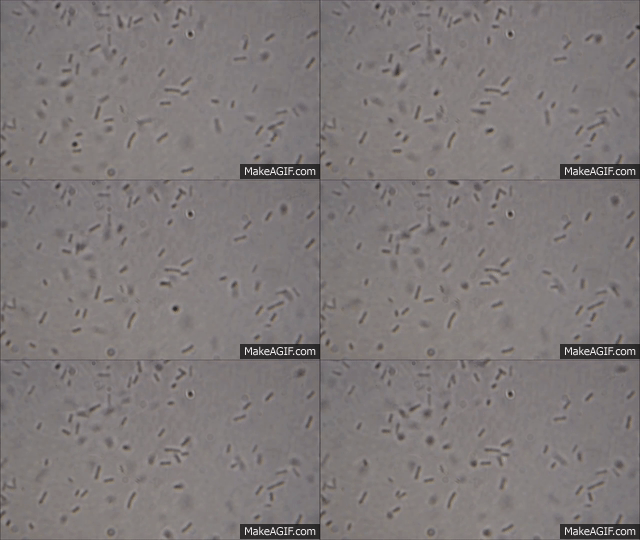
Post Wildfire Soil Restoration, Emotional Ecology and Repair Signaling (May 2026)
What if post fire soil holds a molecular archive of both disturbance and hope and we could build biological instruments that simultaneously repair the soil and signal the repair process in a sensory way? Developed in the MIT Interdisciplinary Synthetic Biology course “How to Grow (Almost) Anything” this on going project imagines four unrelated “neighboring” genetic circuits “bridging” to produce a practical and poetic response to the 2025 Pacific Palisades Wildfires.
Limit No Limit – Paris Design Research Conference
Neighbor Gap Bridge (NGB) an experimental research and pedagogical framework presented at Limit No Limit (Sorbonne, 2024) that examines how learning and creativity operate under conditions of acceleration, crisis, and systemic instability. The project proposes an alternative pedagogical model grounded in liminality, non-instrumental practices, and multi-generational studio inquiry, prioritizing sense-making over solutionism. Drawing from urban studies, design education, and AI literacy, the work reframes learning as a living inquiry that supports human agency and ethical engagement with complex systems.
Attention is All You Need: Visualizing Technological Change
A live listening event in a college community employs playful research probes to listen beneath the surface to the concerns, curiosities and hopes of an educational community in the throes of technological change. Listening across multiple academic disciples, administration and college staff, a holistic Data collection transforms to graphic data mapping to share with the broad community - keeping the conversation responsive fluid.
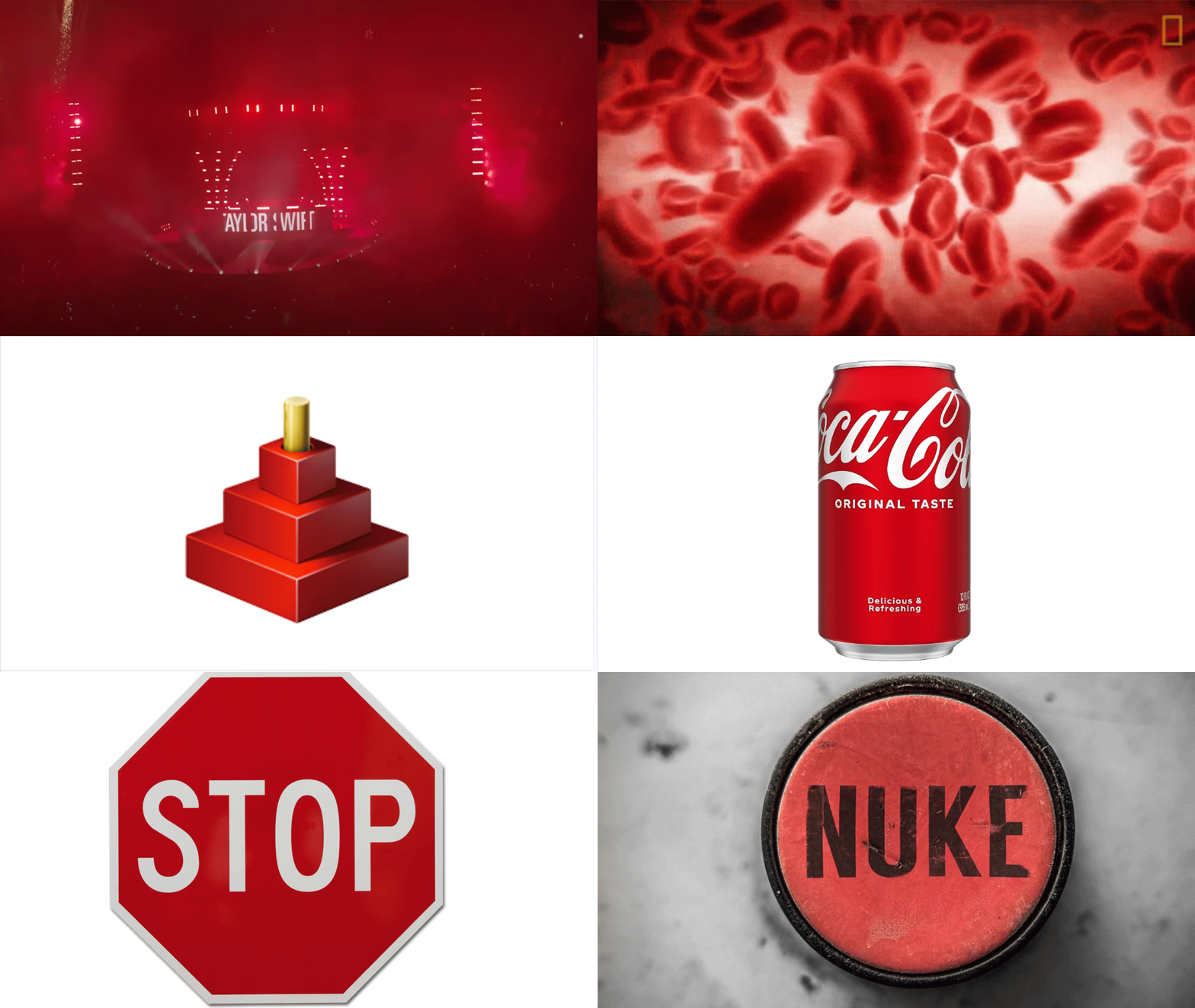
RED: A Research Training Artifact for Divergent Inquiry
Rather than beginning with established topics or research questions, the presentation employs color as a generative constraint designed to disrupt familiar pathways and engineer novelty at the outset of research formation. Moving across biology, politics, media, culture, and ethics, the artifact invites divergent associations that resist premature categorization.
Grounded in the belief that if students enter research through familiar categories, they reproduce familiar knowledge, the project uses disorientation as a productive epistemic moment—particularly for high-achieving students trained in right-answer paradigms. The artifact functions both as a tool for expanding possible research trajectories and as a training intervention that supports pluralistic, design-based approaches to inquiry aligned with contemporary models of researcher preparation.